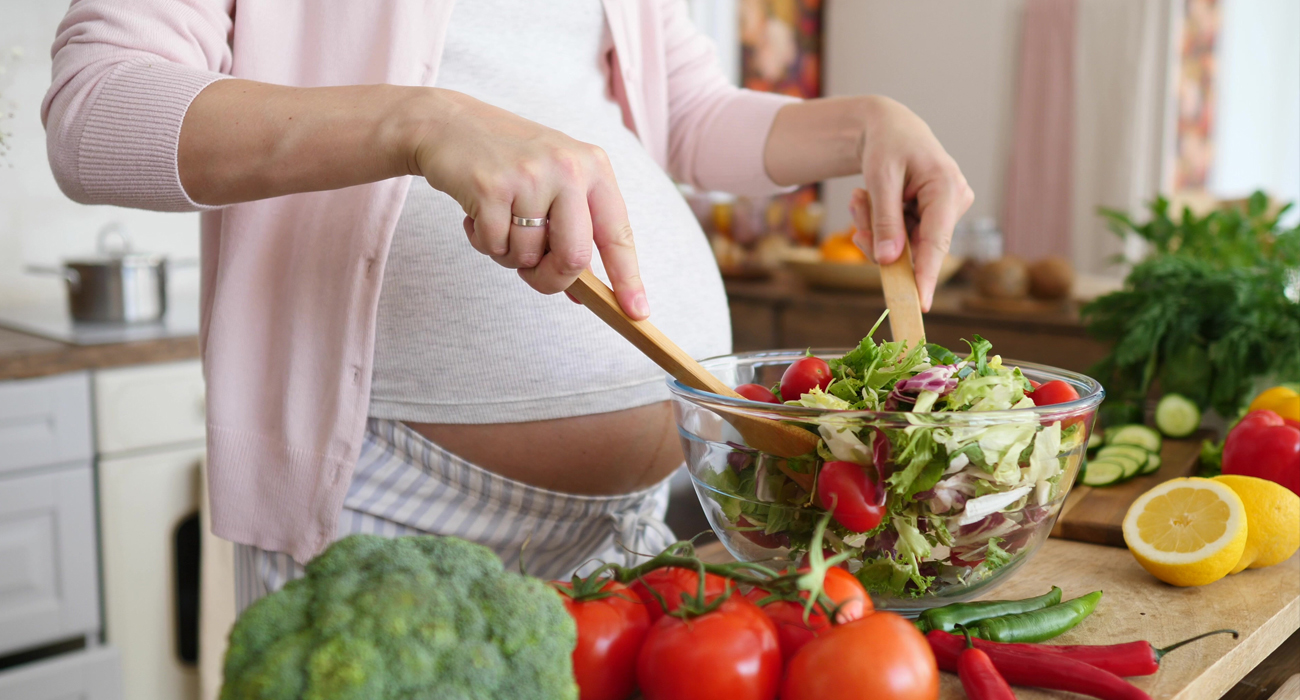
Nutrition advice for pregnancy can feel oddly disconnected from real life. Many “official” recommendations are built for simplicity and standardization, but pregnancy and postpartum are anything but standard.
Registered dietitian and diabetes educator Lily Nichols has built her work around that gap—especially where guidelines don’t match physiology, where research gets translated into sweeping rules, and where moms are left trying to piece together what actually helps them feel well and support their babies.
Her focus spans preconception, pregnancy, postpartum, and nutritional support for pregnancy complications, including gestational diabetes. She’s also the author of Real Food for Pregnancy, Real Food for Fertility, and Real Food for Gestational Diabetes.
This is educational information, not medical advice.
What happens when guidelines don’t fit the condition
Nichols’ path sharpened when she began working in diabetes and pregnancy education and policy. In that work, she repeatedly saw a mismatch: gestational diabetes is often described as carbohydrate intolerance during pregnancy, yet many people are advised to follow a high-carbohydrate diet—and then told the failure to control blood sugar is simply “how it goes.”
Her takeaway was straightforward: when the dietary advice doesn’t fit the physiology, predictable outcomes follow—more medication, more insulin, and more complications.
Nichols describes developing a different nutritional approach in clinical practice and seeing meaningful improvements, including fewer large babies, fewer complications (like preeclampsia), and fewer families needing medication. She also described how rare it became to see the “typical” newborn blood sugar issues the hospital staff expected in babies of mothers labeled as having gestational diabetes.
That experience is what pushed her to publish her first book—less as a trend, and more as a way to put the research and clinical logic on paper for families and practitioners who were hearing too many “it didn’t work for me” stories.
Combining research with ancestral “common sense”
Nichols doesn’t treat evidence-based practice as a narrow lane where only modern clinical trials count. She also looks at anthropology and traditional food patterns as a way to ask: what were humans actually built to thrive on—before industrial food became the baseline?
She points to patterns seen across many cultures: human diets vary by region, but they tend to be omnivorous, built around what’s locally available, and often structured to fill nutrient gaps (including trading for nutrient-rich foods when needed).
A major influence she names is the work of Dr. Weston A. Price, whose observations of traditional diets highlighted consistent themes in nutrient density—especially before ultra-processed foods became dominant.
Nichols also noted how far modern eating has drifted: she cited that 58% of calories in the average American diet come from ultra-processed foods, which are far removed from their original ingredients.
“Real food,” in her framing, doesn’t mean perfection. It means eating closer to recognizable foods most of the time—and being able to tell the difference between something like corn versus something like high-fructose corn syrup.
Meat, fertility, and what research often fails to measure
One frustration Nichols named clearly: nutrition studies often don’t separate food quality in the way real humans eat.
For example, research may group “meat” together without differentiating pasture-raised meat from conventional meat. Similar issues show up with dairy (“full fat” vs “low fat” without context), or with processed meats (without distinguishing traditional curing methods from modern additive-heavy processing).
She also described another issue: sometimes the conclusions in a study’s title and abstract don’t accurately reflect the data inside the paper. Her point wasn’t that research is useless—it’s that families and clinicians often need to read more carefully than the headlines suggest.
When direct studies aren’t designed the way we’d want, Nichols mentioned looking at “component” research as another lens—for example, findings on dietary creatine (primarily found in meat and fish), or patterns where higher protein and lower carbohydrate intake supports hormonal and ovulatory outcomes for people with insulin-resistance patterns (like PCOS).
The simplest upgrade: start with breakfast
If there’s one change Nichols emphasized that can reshape the whole day, it’s this: eat breakfast, and make it protein-forward.
She described breakfast as a lever for blood sugar stability, cravings, and overall intake—especially when it happens relatively soon after waking (she suggested within roughly 30–60 minutes when possible). Her practical target was 25+ grams of protein at meals, with breakfast being a powerful place to start.
She also addressed the real-life complication: nausea in early pregnancy. Her approach wasn’t rigid. She noted that carbs can help settle the stomach short-term, but adding a little protein (even later, once tolerated) can help reduce the “nauseous → eat carbs → nausea returns” cycle that some people experience.
She shared a personal example of what worked better for her than crackers: salted cashews paired with dried tart cherries, to get salt, fat/protein, and a nausea-friendly sweet-tart flavor.
Caffeine, tea, and finding your “sweet spot”
Nichols’ stance on caffeine was not framed as all-or-nothing. Her emphasis was on total intake and individual response.
She noted that it’s often easier to stay in a lower caffeine range with tea than with coffee, and she shared that black tea works well for her personally while coffee doesn’t feel good in her body. Her larger point was that many people rely on caffeine as “energy,” when it may function more like a stress push—so it’s worth assessing whether it’s supporting your cycle, mood, and sleep, or quietly disrupting them.
When it comes to herbs (including herbal teas), she noted a recurring limitation: pregnancy research on herbs is often sparse, and modern funding doesn’t prioritize studying traditional foods and plant medicines in the way families would benefit from.
Gestational diabetes testing: choosing a path that actually gives useful information
Nichols described gestational diabetes testing as a common point of stress—especially when families want options beyond the standard approach.
Her general preference, if someone chooses to do a glucose tolerance test, was to use a test with a measured glucose amount (because diagnostic thresholds are built around those measurements). She named The Fresh Test as an example people use to avoid ingredients they don’t want (like dyes and additives) while still using a measured glucose dose.
She was less enthusiastic about DIY alternatives like fruit juice, a “test meal,” or jelly beans, because the glucose amount and carbohydrate type often don’t match what the test thresholds were designed for.
If someone declines the standard test entirely, Nichols described an alternative that she sees as more informative: a period of home blood sugar monitoring (she suggested about two weeks), including fasting blood sugars and post-meal checks—intentionally testing some higher-carb meals so you can understand your personal glucose response and adjust accordingly.
Supplements for blood sugar: helpful, but not the main lever
Nichols placed supplements behind the bigger lifestyle levers: diet, movement (including walking after meals), building muscle over time, sleep, light exposure for circadian rhythm, and stress.
If someone is supplementing, she named nutrients that can matter for blood sugar regulation, including thiamine, magnesium, electrolytes (including sodium and potassium), inositol, and vitamin D (ideally guided by lab testing and rechecks).
She also noted a practical point many people miss: concentrated trace mineral drops are often mostly magnesium, so people may still need sodium and potassium from food or other sources. She mentioned cream of tartar as a potassium source she’s comfortable with.
Postpartum is not “after”—it’s the season with the highest demands
A final theme Nichols emphasized is one many moms feel but rarely hear named clearly: postpartum can be more nutritionally demanding than pregnancy.
She described postpartum as a time when nutrient needs increase—especially if breastfeeding—and where cultural support has often eroded, leaving many families to “figure it out” without the traditional scaffolding that used to protect mothers.
Her practical advice centered on preparing for postpartum nourishment the way you’d prepare for a major event: freezer meals, simple nutrient-dense staples, and prioritizing protein.
She also pointed to the power of traditional postpartum foods across cultures—soups, stews, slow-cooked meats, collagen-rich broths—foods that support tissue repair, hormone recovery, and sustained energy when sleep is fragmented.
If You Want the Full Conversation
This article is informed by Episode 147 of the Born Wild Podcast: “Real Food for Real Moms with Lily Nichols”, hosted by Sophia Henderson (Born Wild Midwifery) with special guest Lily Nichols.

Get in touch with Born Wild Midwifery
If you want support navigating nutrition in pregnancy, gestational diabetes testing options, or postpartum replenishment—especially in a way that respects your autonomy and your real life—reach out to Born Wild Midwifery.